T01
Traceable assumptions
Inputs, boundaries, data sources, and simplifications are visible and reviewable.
Engineering analysis Additive manufacturing HPC
CFD, FEA, statistical analysis, testing, 3D modeling and printing—backed by purpose-built simulation workstations.
Trust the evidence behind every engineering decision.
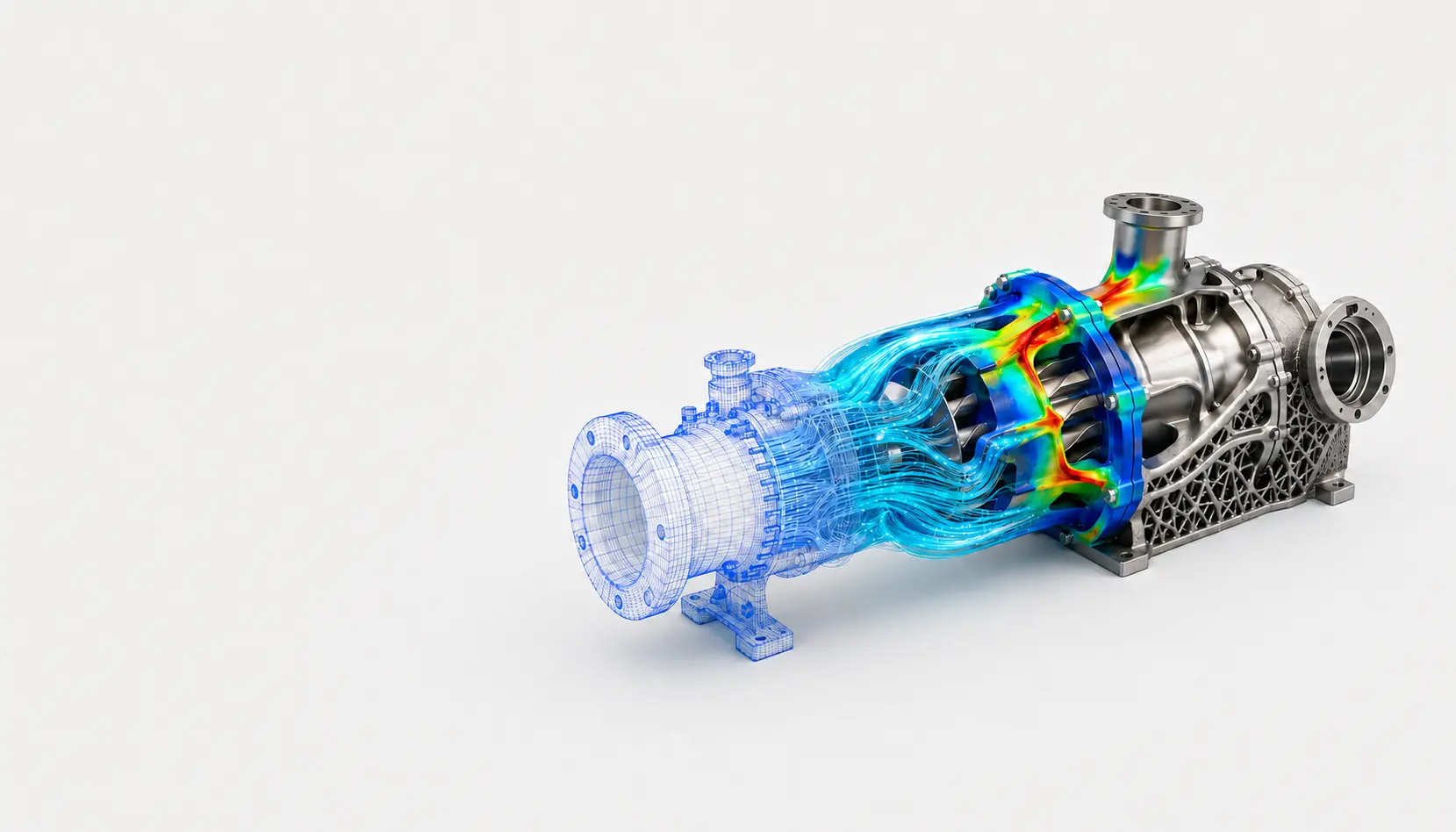
A connected engineering workflow
Trusthoo connects analysis, prototyping, testing, and computing so that each activity answers the same engineering question. The result is a clearer technical basis and a more efficient route to the next decision.
Frame the decision, physics, operating envelope, and evidence required.
Prepare geometry, assumptions, material data, and boundary conditions.
Resolve the governing behavior and quantify numerical sensitivity.
Create prototypes, fixtures, or test articles that preserve design intent.
Collect targeted measurements and compare them with predictions.
Translate the evidence into design changes, margins, and next actions.
The meaning behind the name
TRUSTHOO is a working standard for how analysis, modeling, testing, and computing should support a consequential decision.
The name asks a useful question: who do you trust with the physics behind your design? Our answer is a transparent process that can be examined, reproduced, and strengthened with evidence.
Inputs, boundaries, data sources, and simplifications are visible and reviewable.
Models, calculations, and data workflows are organized so results can be recreated.
Numerical, measurement, and model-form uncertainty are addressed in the decision.
Every model is tied to a defined engineering question and acceptance basis.
Measurements are selected to challenge the assumptions that matter most.
Computing resources are sized around the solver, scale, and turnaround objective.
Design changes follow governing behavior, constraints, and sensitivity—not guesswork.
Recommendations distinguish evidence, engineering judgment, and remaining risk.
Verification evaluates whether the equations were solved correctly. Validation assesses how accurately the model represents its intended use. Transparent uncertainty shows how confidently the result can support a decision.
Core capabilities
Engage Trusthoo for one focused task or for an integrated program that carries assumptions, evidence, and decisions consistently across disciplines.
Computational Fluid Dynamics
Resolve flow, pressure, temperature, species transport, and conjugate heat-transfer behavior before committing to hardware.
Finite Element Analysis
Evaluate structural response under realistic mechanical and thermal loading, with assumptions and margins made explicit.
Experimental Validation
Design focused tests that answer the engineering question, produce traceable data, and strengthen model credibility.
CAD, Prototyping and DfAM
Develop production-ready geometry and functional prototypes for design studies, fit checks, testing, and iterative learning.
Data and Uncertainty
Turn simulation and test results into defensible decisions using statistical models, sensitivity studies, and uncertainty analysis.
Simulation Computing
Specify balanced compute systems around solver behavior, model scale, memory demand, reliability, and turnaround targets.
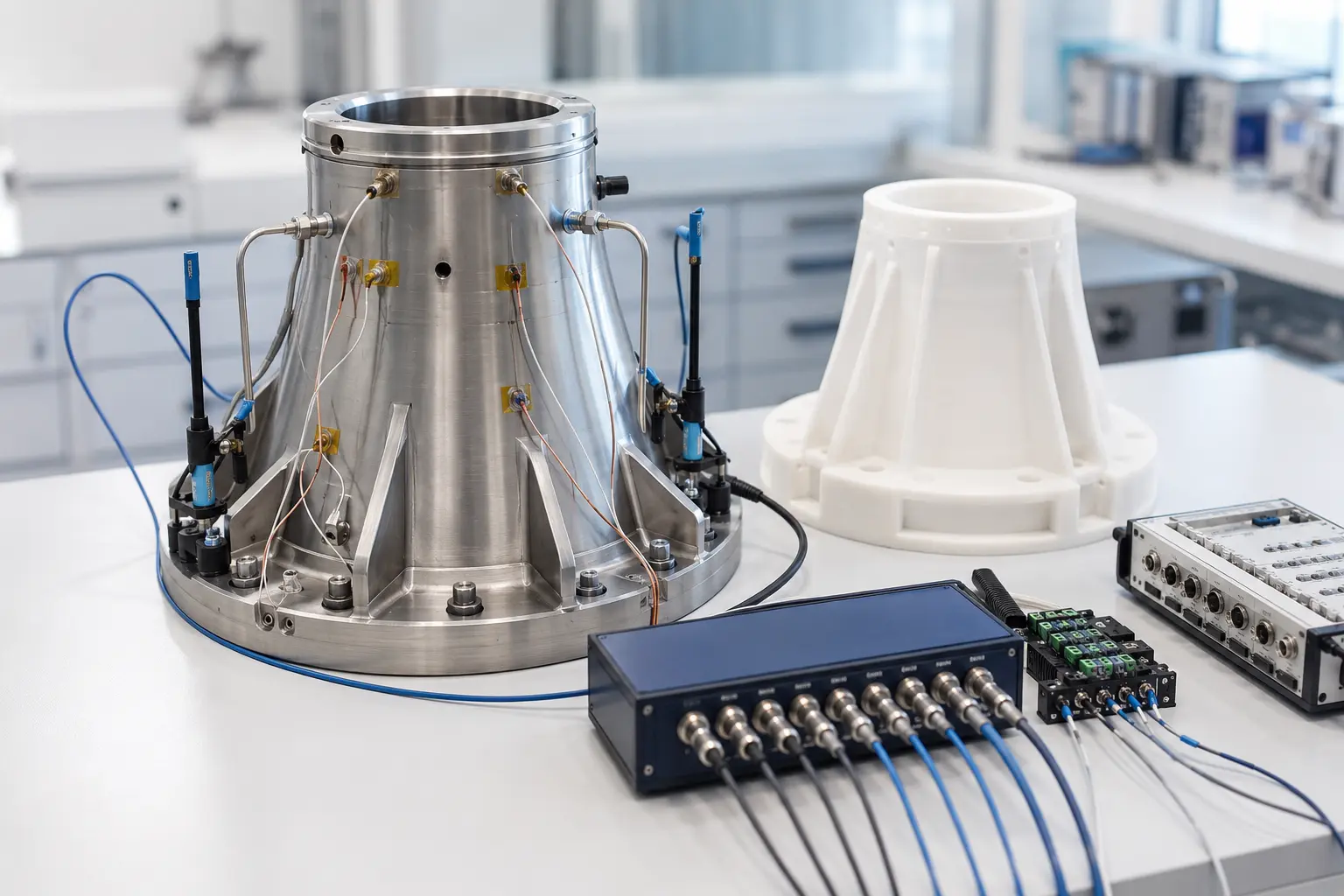
Testing and validation
A useful validation program does more than produce data. It targets the assumptions that matter, controls the comparison, and shows what the remaining uncertainty means for the design.
Industries and applications
The methods are broadly applicable; the questions are always specific. Every scope begins with the operating environment, decision criteria, and consequences of uncertainty.
Thermal management, heat exchangers, pressure-boundary systems, ventilation, and safety-relevant performance.
Aerodynamics, cooling, structural response, lightweight design, and prototype-driven development.
Hydrodynamics, machinery systems, thermal-fluid equipment, harsh-environment loads, and performance optimization.
Piping, vessels, rotating equipment, process flow, heat transfer, equipment life, and operational improvement.
Additive design, tooling, fixtures, process development, distortion risk, and build-test-learn iteration.
First-of-a-kind models, experimental methods, data analysis, validation planning, and technical documentation.
Problems we are built to solve
The analysis, experiment, prototype, or computing platform is selected only after the engineering question is clear.
Thermal-fluid
Combine CFD, heat transfer, sensitivity studies, and targeted measurements to identify limiting conditions and practical design improvements.
Discuss this type of projectStructural
Connect realistic load paths, thermal effects, contact behavior, and material response in a reviewable FEA basis.
Discuss this type of projectPrototype
Prepare, print, instrument, and test a focused prototype instead of carrying avoidable assumptions into the final design.
Discuss this type of projectSimulation workstations
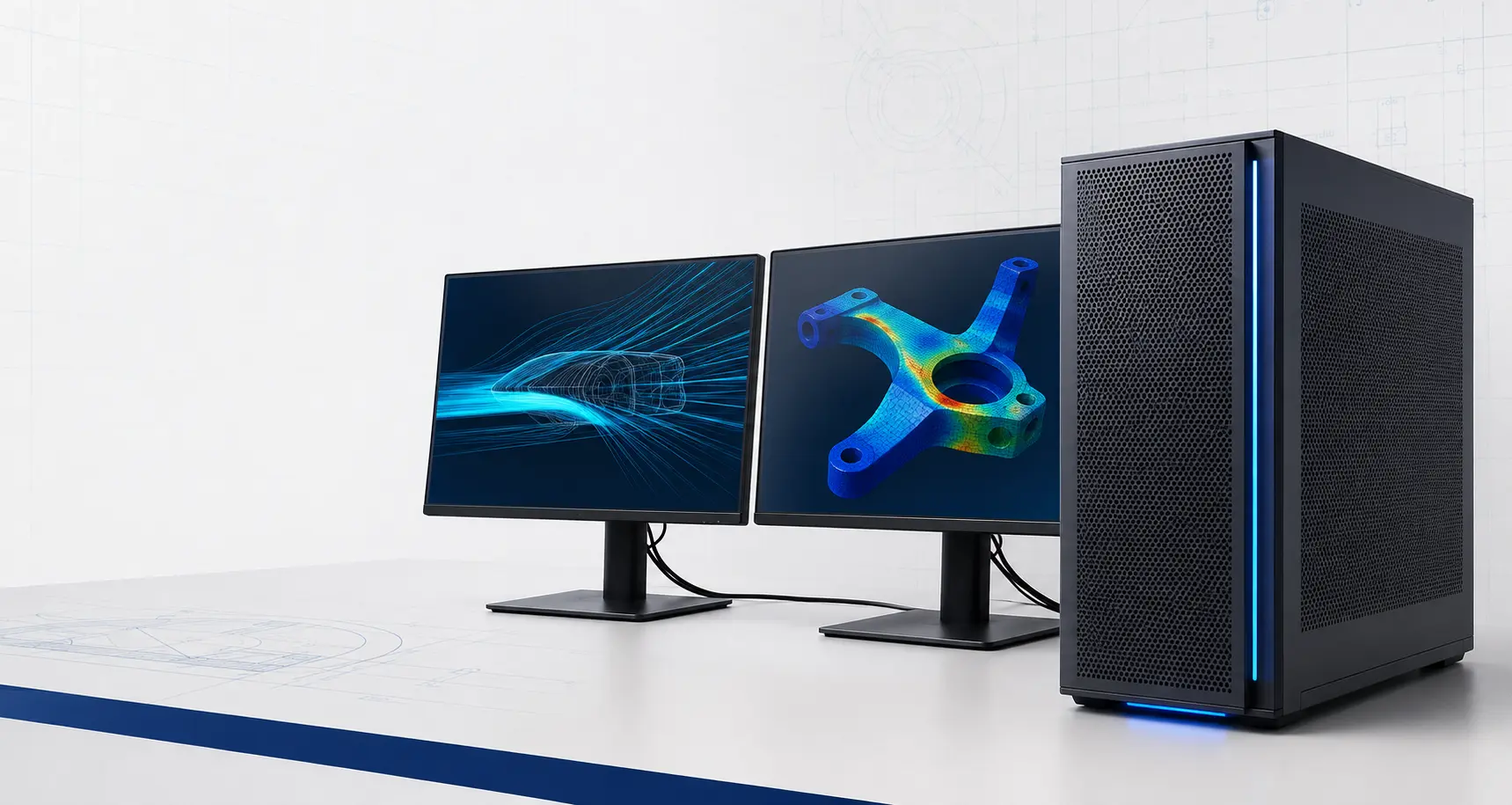
CFD and FEA performance depends on how a solver uses cores, memory bandwidth, capacity, GPU acceleration, storage, and licensing. Trusthoo helps translate actual workloads into a balanced, supportable configuration.
Solver, model size, run type, concurrency, and turnaround targets.
CPU, GPU, memory, storage, thermals, reliability, and serviceability.
Configuration record, benchmark plan, acceptance checks, and upgrade path.
How the work is communicated
Document geometry, materials, boundary conditions, simplifications, data sources, and acceptance criteria.
Address mesh or numerical sensitivity, measurement uncertainty, model-form limitations, and result robustness.
Separate observations from conclusions and connect each recommendation to the supporting evidence.
Frequently asked questions
A short technical conversation is usually enough to identify what evidence is needed and how to produce it efficiently.
Yes. An engagement can focus on a specific analysis, independent review, test plan, prototype, statistical study, or computing requirement. The scope should match the decision you need to make.
Not always. The right evidence depends on project maturity, risk, available data, and the consequence of uncertainty. When both are useful, the simulation can guide the test and the measurements can strengthen the model.
A short problem statement, geometry or sketches, expected operating conditions, material information, known constraints, available measurements, and the decision deadline are usually enough to define a practical first step.
Yes. The configuration can be based on the intended solvers, mesh or model size, run type, memory needs, storage behavior, budget, support expectations, and desired turnaround time.
Start with the engineering question
Share the problem, available data, constraints, and timing. Trusthoo can help define the smallest credible effort that moves the decision forward.
Request a consultation